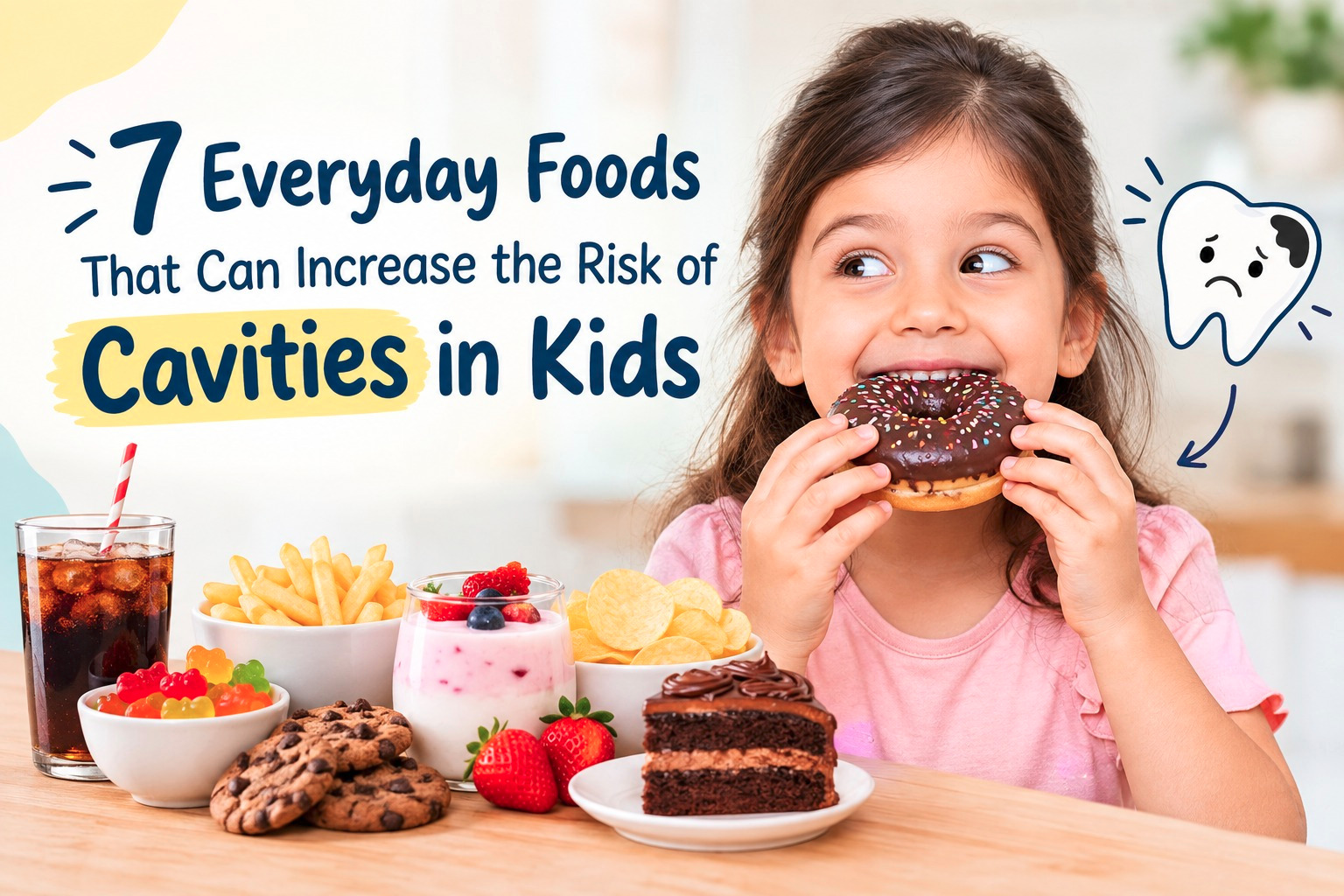
As a Pediatric Dentist, one of the most common questions I hear from parents in my clinic is, “Doctor, my child brushes twice a day, so why does he still have cavities?”
The answer usually lies not in how often a child brushes, but in what they are eating between meals. Childhood cavities (also called early childhood caries) are one of the most common chronic diseases in kids, and diet plays a much bigger role than most parents realize.
In this blog, let’s understand which everyday foods are silently damaging your child’s teeth, and why.
Before we get into the food list, it helps to understand the process. The mouth is full of bacteria, and certain bacteria feed on sugars and starches left behind on the teeth. As they feed, they produce acid. This acid attacks the enamel (the protective outer layer of the tooth) and slowly weakens it, causing what we call demineralisation. Over time, and with repeated acid attacks, this leads to a cavity.
A child who sips a sugary drink slowly over two hours exposes their teeth to acid attacks far more than a child who eats a chocolate bar in five minutes and then rinses with water. Sticky, slow-dissolving, and frequently consumed foods are the real culprits.
With that understanding, here are seven everyday foods parents should watch out for.
Toffees, caramels, and chewy candies cling to the grooves and pits of the teeth long after they’ve been swallowed. Unlike a food that clears the mouth quickly, sticky candy can remain lodged between teeth for hours, giving bacteria a continuous sugar supply to feed on.
What to do instead: If your child enjoys sweets, choose chocolate over sticky toffees, since chocolate melts and clears the mouth faster.
Many parents assume fruit juice is a “healthy” alternative to soft drinks, but most packaged juices are loaded with added sugar and are also naturally acidic. This acidity can soften enamel even before bacteria get involved.
The bigger problem is how juice is consumed, often sipped slowly through a sippy cup or straw across the day, which means the teeth are bathed in sugar and acid for extended periods.
What to do instead: Offer whole fruits instead of juice, and if juice is given, serve it with meals rather than throughout the day.
Dried fruits are often marketed as a healthy snack, and nutritionally, they do have benefits. However, from a dental standpoint, they are one of the stickiest foods a child can eat. Raisins, in particular, get wedged into the biting surfaces of molars and can stay there long after the snack is finished.
What to do instead: If your child eats dried fruits, encourage them to drink water afterward, or pair them with a meal rather than eating them as an isolated snack.
Chips may not taste sweet, but starches break down into simple sugars in the mouth. Combine this with the fact that chips tend to get stuck in the crevices of teeth, and you have a recipe that’s just as harmful as candy, sometimes more so, because parents don’t think to brush after a “savoury” snack.
What to do instead: Encourage rinsing with water after starchy snacks, and try to avoid grazing on chips throughout the day.
Sodas and sports drinks are a double threat: they’re high in sugar and highly acidic. Even sugar-free versions can erode enamel due to their acidity alone. Children who sip these drinks over long periods, at school, during play, or in front of screens, are giving their teeth a near-constant acid bath.
What to do instead: Water should remain the primary drink for children. If sports drinks are needed for intense physical activity, they should be consumed quickly rather than sipped slowly.
Plain milk and plain yogurt are genuinely good for a child’s teeth and bones. The trouble starts when flavouring and added sugar enter the picture. Sweetened yogurt drinks and flavoured milk cartons, especially the ones sipped through a straw over time, work much like sugary juice in terms of cavity risk.
What to do instead: Choose plain dairy and add natural sweetness with fresh fruit if needed.
White bread, crackers, biscuits, and similar refined carbohydrate snacks break down into sugar quickly in the mouth and tend to form a soft, sticky paste that adheres to teeth surfaces. Because these are often “all-day” snack foods, given during car rides, TV time, or between meals, they create frequent, prolonged sugar exposure.
What to do instead: Try to time these snacks around main meals rather than spreading them throughout the day, and encourage a water rinse afterward.
If there’s one thing I want every parent reading this to remember, it’s this: frequency of sugar exposure matters more than total sugar quantity.
A child who eats a slice of cake once and brushes afterward is at lower risk than a child who sips a juice box on and off for three hours. Try to:
Diet management works best alongside regular dental check-ups. Early cavities in baby teeth are often painless in the beginning, which means they can go unnoticed until they become more serious. A routine check-up every six months allows your child’s dentist to catch early demineralisation before it becomes a full-blown cavity, and to guide you on remineralising agents and preventive treatments where needed.
If your child hasn’t had a dental check-up recently, or if you’ve noticed white or brown spots on their teeth, don’t wait for a complaint of pain. Early intervention is always simpler, gentler, and less stressful for both you and your child.
This blog is for general educational purposes and does not replace a professional dental consultation. If you have concerns about your child’s oral health, please schedule an appointment with a qualified Pediatric Dentist.
Dr. Anamika Jain
Pediatric Dentist | Renaissance Dental Clinic
Dr. Anamika Jain completed her dental post-graduation from the prestigious King George’s Medical University (KGMU), Lucknow, where she was awarded the Gold Medal along with several other academic honours during her training. She has also worked at one of New Delhi’s most renowned institutions, Ram Manohar Lohia Hospital (RML).
Dr. Jain provides comprehensive, high-quality dental care to patients across Indirapuram, Vaishali, Vasundhara, Ghaziabad, Noida, Delhi NCR, and surrounding areas. Renaissance Dental Clinic is a certified Child Dental Centre.
Children experience dental problems differently from adults and are continually going through developmental growth stages, which is why it is highly beneficial to seek dental care from a specialist trained specifically to treat children. As a Pediatric Dentist, Dr. Jain is trained and skilled to understand and address the unique oral health needs of every child she treats, and to guide parents on maintaining good oral health throughout their child’s lifetime.


Copyright © 2024 finddentistforkids . All rights reserved.
